Why manufacturing planning needs its own world
Engineering tells the company what the product is. Manufacturing must decide how that product will actually be built. These are not the same problem. That is why manufacturing planning needs its own structure, process view, and planning logic.
Many beginners think manufacturing planning is only copying engineering BOM and sending it to the plant. In real projects that is not enough. The planner must decide how parts are grouped, how operations are sequenced, which tools are needed, where work is done, and what process logic must be followed before anything reaches ERP or MES.
What Manufacturing Process Planner really does
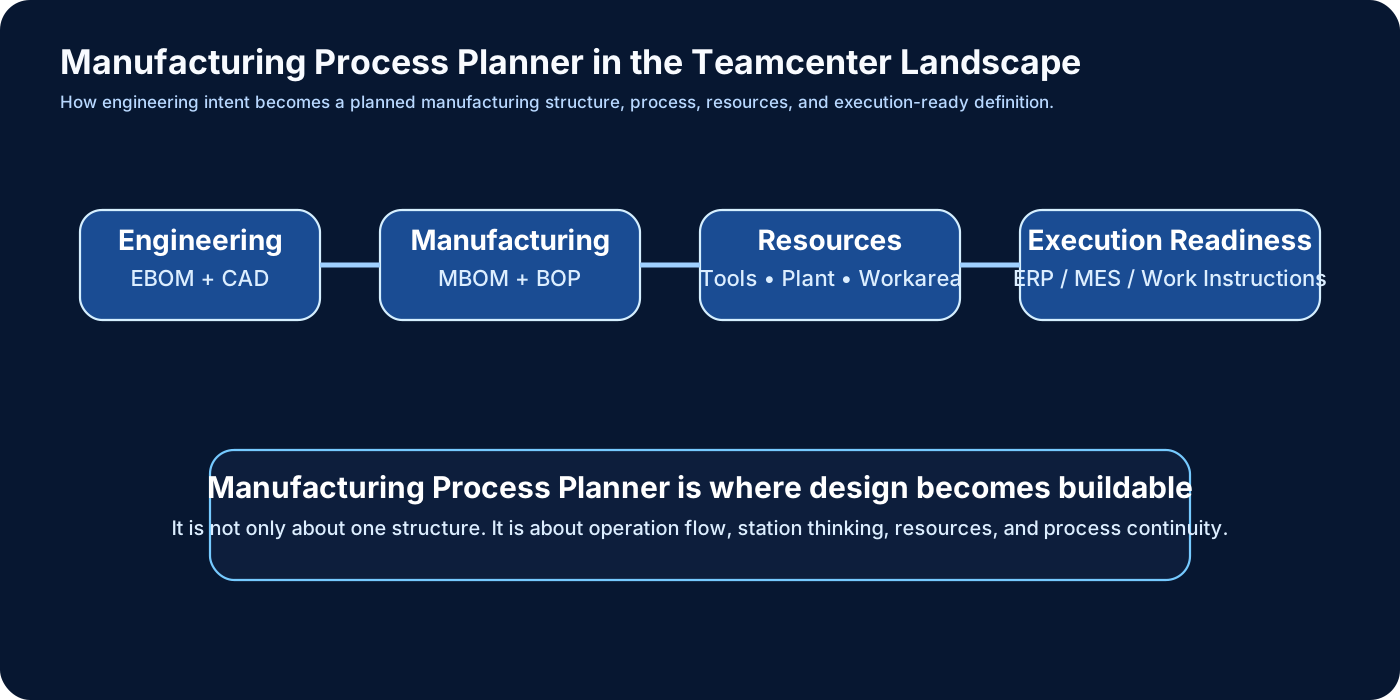
Manufacturing Process Planner is where design becomes buildable. It helps planners create and maintain the manufacturing view of the product and connect that view with process information.
- MBOM defines the manufacturing structure.
- BOP defines the process sequence and operational logic.
- Resources connect tools, plant context, work areas, and planning requirements.
So the planner is not only moving parts. The planner is shaping the path from engineering definition to execution readiness.
EBOM to MBOM: why this step is so important
The engineering BOM answers: what is the product made of? The manufacturing BOM answers: how should this product be built? Those two answers are related, but they are not identical.
Manufacturing may group, split, reorder, or restructure content so it matches real assembly flow. That is why MBOM is not just a copy of EBOM. It is a controlled manufacturing interpretation of engineering truth.
Where BOP comes in
Once the manufacturing structure is understood, the planner must define process logic. This is where the bill of process becomes important. BOP answers practical questions such as:
- In what order will the work happen?
- Which operation belongs to which station or work area?
- Which resources are needed?
- What comes before or after?
Without this, the product may be defined, but it is not yet ready to be executed.
Typical planning flow step by step
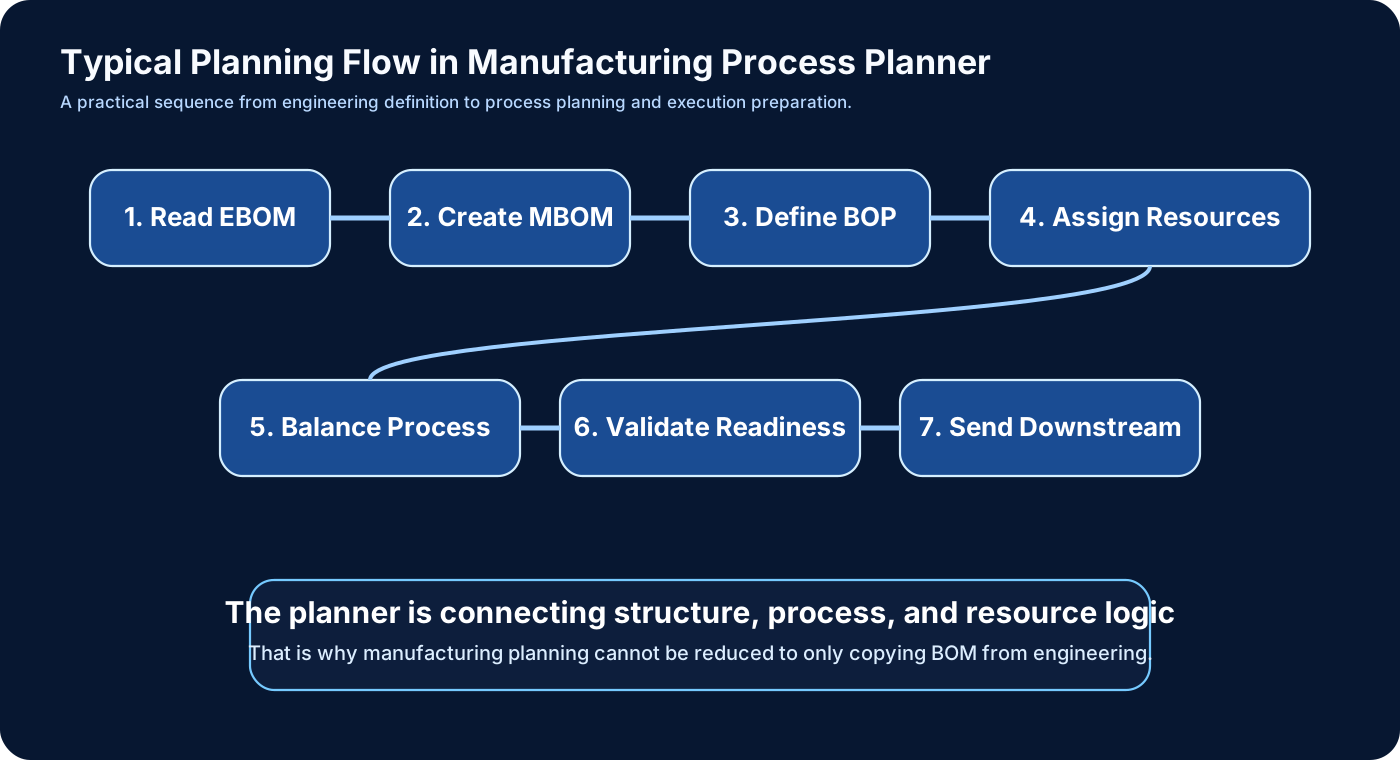
- Read engineering definition and understand what is released or available.
- Create or refine MBOM according to manufacturing need.
- Define process operations and sequence in the BOP.
- Assign resources such as tools, stations, lines, or work areas.
- Balance and validate the process.
- Prepare the result for downstream execution systems.
This flow is why Manufacturing Process Planner is valuable. It turns product definition into process-ready manufacturing knowledge.
What Easy Plan means in practical terms
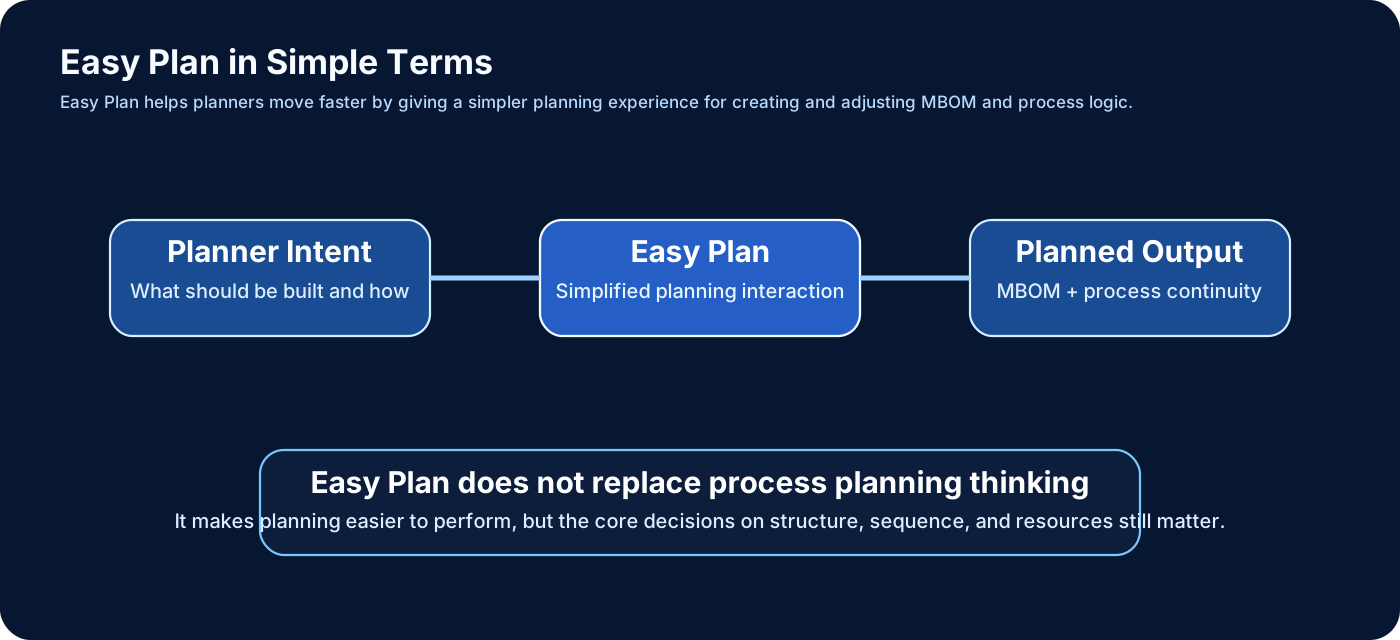
Easy Plan is important because many planners do not want a complicated technical experience just to create or adjust manufacturing planning information. Easy Plan supports a simpler planning interaction so planners can move faster and focus more on the planning intent itself.
In simple words, Easy Plan is not replacing manufacturing planning logic. It is making the planner’s interaction easier and more direct.
What Easy Plan does not replace
Easy Plan can make the interaction easier, but it does not remove the need for real planning decisions. Someone still has to decide:
- what the manufacturing structure should look like
- how the process should be sequenced
- which resources are really needed
- what should be pushed downstream
That is why easy planning is not the same as simple thinking. The planning work itself still needs strong understanding.
How Manufacturing Process Planner connects to ERP and MES
After planning is mature enough, the result may need to be consumed by downstream systems. ERP may need material and execution-relevant business information. MES may need operation and execution context. The important thing is that downstream systems should receive controlled manufacturing definition, not random manual interpretation.
Where real projects usually fail
Most failures do not happen because the tool is weak. They happen because the planning logic is weak. Common problems include:
- trying to use EBOM directly as MBOM without manufacturing thinking
- missing operation sequence clarity
- resources not connected properly
- downstream systems receiving partial or inconsistent information
- planners working outside controlled lifecycle behavior
How to understand MPP in one simple sentence
Manufacturing Process Planner is the place where product definition becomes buildable and executable through manufacturing structure, process logic, and resource understanding.
Final thought
If engineering defines the product, Manufacturing Process Planner defines the path to build that product. That is why it is so important. It closes the gap between design intent and plant reality.
Easy Plan makes that journey easier for planners, but the real value still comes from good planning decisions, not only from interface simplicity.