1. Why SLM is needed
Most companies are reasonably strong in design systems and manufacturing systems, but they become weak once the product is delivered. The difficult questions begin in the field:
- What exact configuration is operating right now?
- Which part was replaced?
- Was the replacement approved?
- What is the maintained state today?
- How much life is left in this component?
These are not only design questions and not only ERP questions. These are Service Lifecycle questions.
2. What SLM really means
Service Lifecycle Management is not just another page after BOM and change management. It is the discipline of keeping product truth controlled after manufacturing.
SLM = managing product truth after manufacturing.
In practical terms, SLM helps the organization know:
- what was built
- what was delivered
- what changed in service
- what exists now
3. End-to-End lifecycle flow
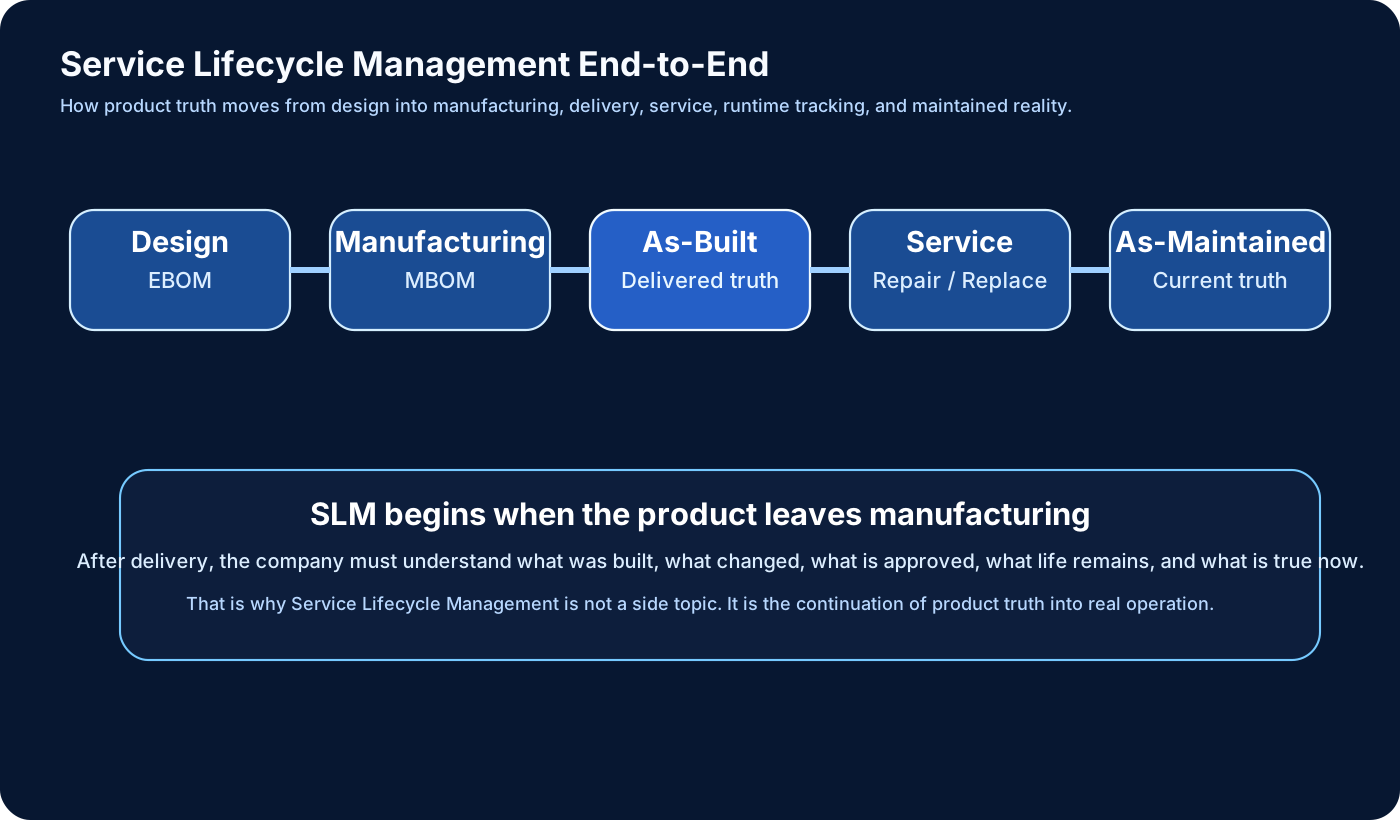
A product does not stop at EBOM or MBOM. Real lifecycle continuity looks like this:
Design → EBOM
        ↓
Manufacturing → MBOM
        ↓
As-Built (Delivered Reality)
        ↓
Service (Repair / Replace / Inspect)
        ↓
As-Maintained (Current Reality)
This is where SLM becomes valuable. It continues product understanding after the factory.
4. As-Designed vs As-Built vs As-Maintained
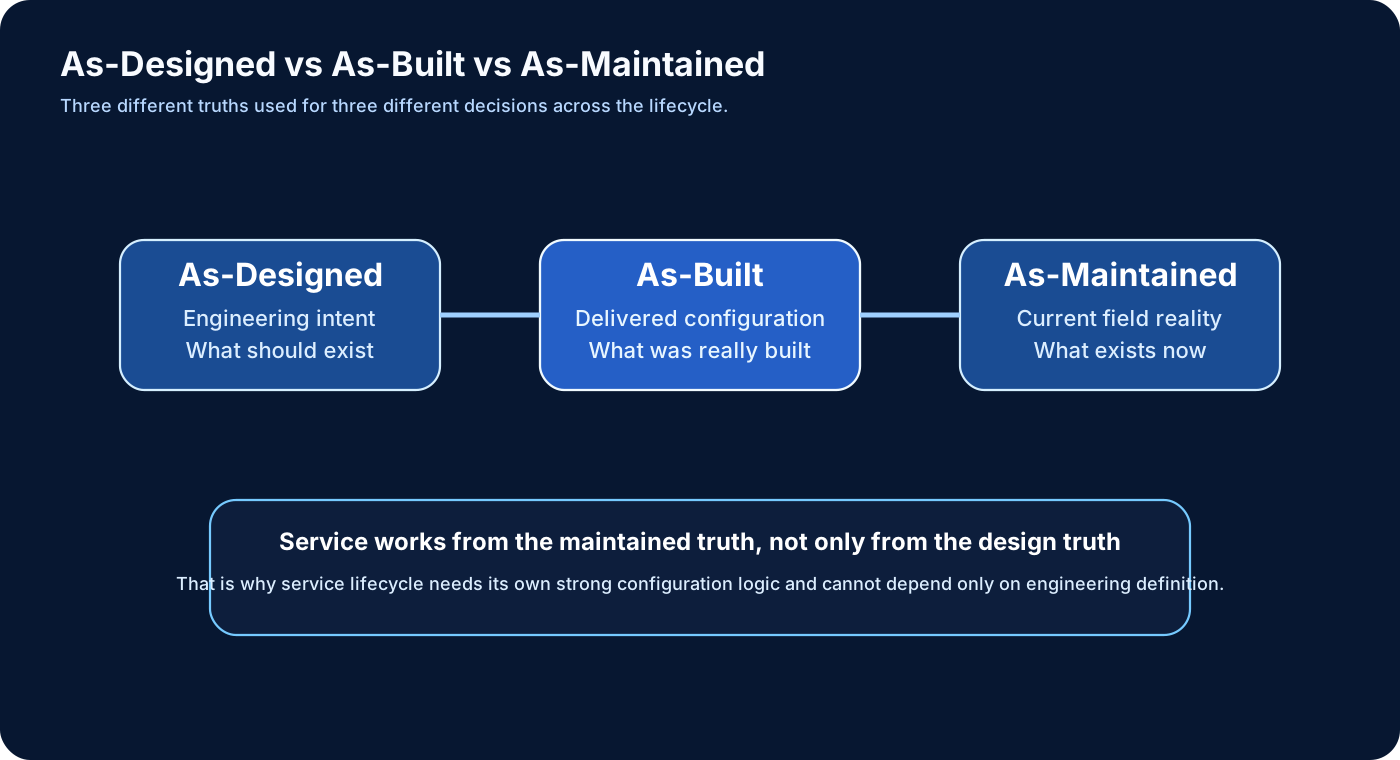
These three truths are often mixed together, but they answer different questions.
As-Designed
As-Designed is engineering intent. It tells us what should exist according to design and released product definition.
As-Built
As-Built is delivered reality. It tells us what was actually manufactured and sent into operation. This may differ from design due to substitutions, manufacturing decisions, or physical build reality.
As-Maintained
As-Maintained is current field truth. It tells us what exists now after repair, replacement, inspection, upgrades, and service actions.
These are not duplicate names. They are three different lifecycle truths used for three different decisions.
5. Why serial part is mandatory
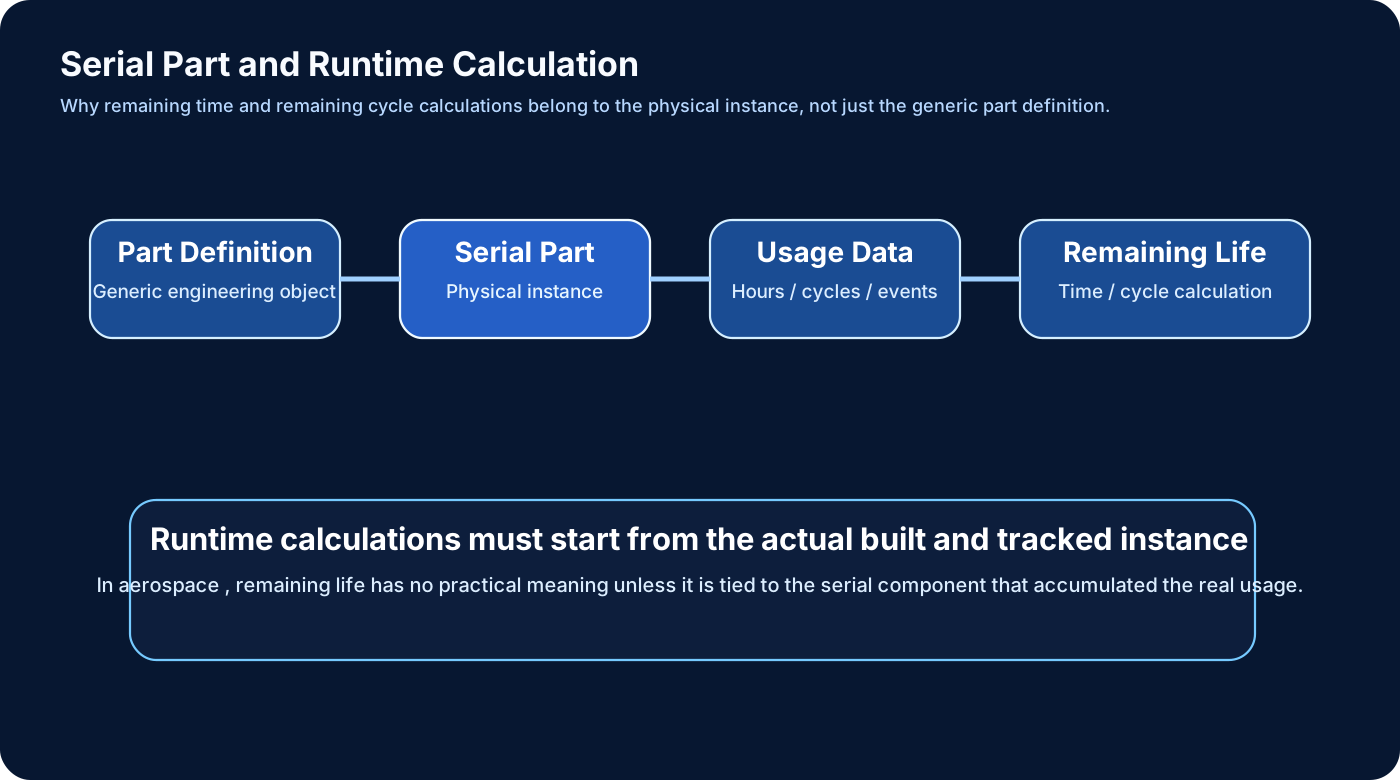
A generic part definition is not enough for service. Service does not happen to a design object in abstraction. Service happens to a physical product instance.
That is why serial part is so important. A serial part represents the real physical instance in operation.
Without serial tracking:
- you know the definition
- you do not know the real unit
- you cannot track actual usage correctly
With serial tracking:
- each physical unit has its own identity
- each unit has its own service history
- each unit can have its own runtime and maintenance state
Serial part is the bridge between digital definition and physical reality.
6. Runtime calculation: remaining time and remaining cycles
Service lifecycle is not just about product structure. It is also about usage-based truth.
Real service decisions depend on runtime-related values such as:
- remaining life
- remaining cycles
- operating hours
- maintenance intervals
Example: A component may be designed for 10,000 cycles. If a physical serial component has already accumulated 7,000 cycles, then the real maintained truth is not only “installed.” The meaningful truth is “3,000 cycles remaining.”
This is why runtime calculations matter:
- safety
- maintenance planning
- compliance
- service scheduling
Runtime calculations must be tied to:
- the serial instance
- the built baseline
- real usage accumulated in the field
7. SLM in aerospace
Aerospace is one of the strongest examples for understanding SLM. Products live long, are safety-critical, and are regulated heavily.
Think about one aircraft engine. It is designed using engineering structure, manufactured with real build decisions, delivered as a physical configuration, then maintained over years.
During service:
- parts wear out
- serial components are replaced
- inspections happen
- runtime accumulates
- configuration changes over time
In aerospace, the organization must know:
- which exact configuration was delivered
- which serial unit is running now
- which parts were replaced
- how much life is remaining
- whether the engine is still compliant
That is why SLM in aerospace is not optional. It is essential for traceability, safety, and certification confidence.
8. Why procurement is needed in SLM
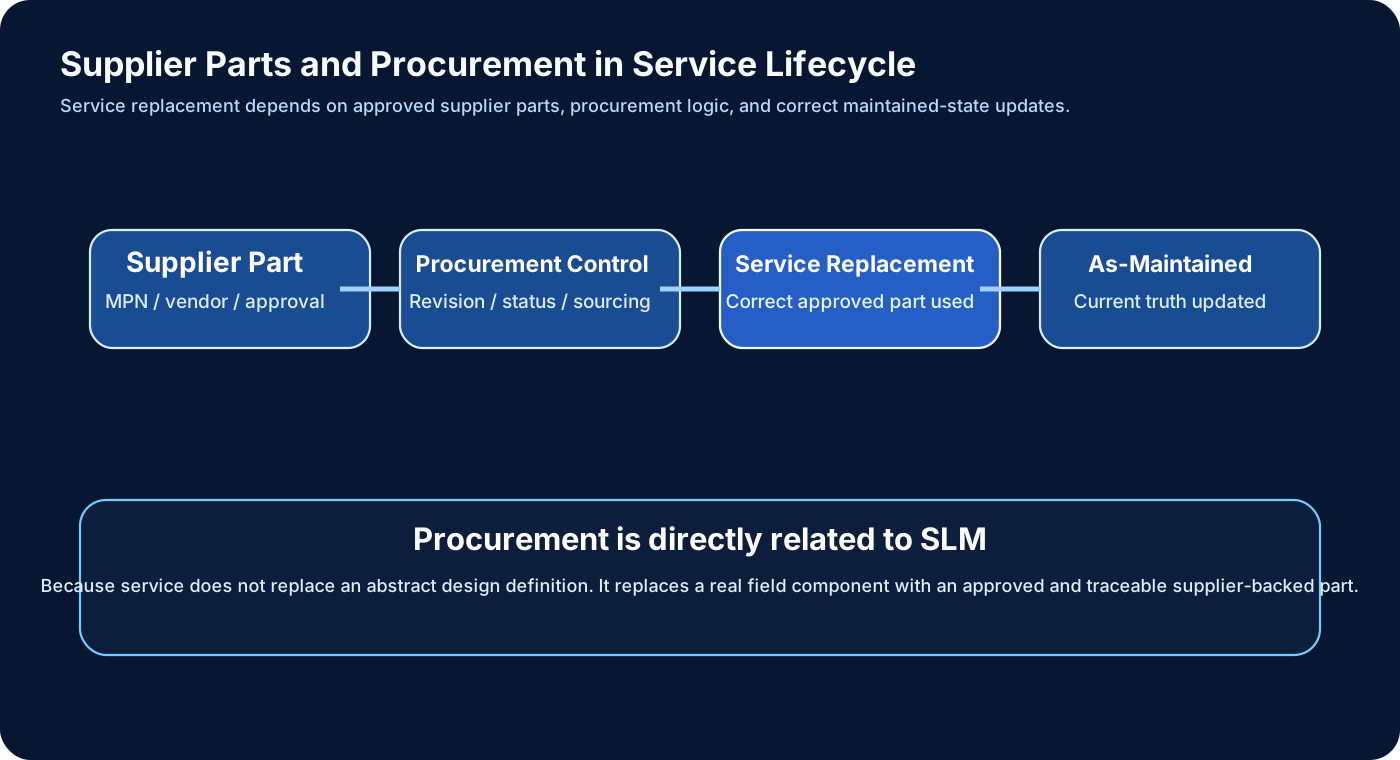
Procurement is not only an ERP concern. In service lifecycle, procurement matters because service does not replace abstract definitions. It replaces real field components using approved and traceable replacement parts.
A service engineer must know:
- which supplier part is valid
- which vendor is approved
- which manufacturer part number applies
- whether the replacement is acceptable for the maintained configuration
So yes, procurement is directly related to SLM.
9. Commercial part vs inhouse part
Inhouse part
An inhouse part is designed and controlled internally. It belongs strongly to engineering authority.
Commercial or supplier part
A commercial part is sourced externally and usually tied to supplier information, MPN, procurement control, and vendor approval.
In service lifecycle:
- inhouse part matters for design authority and engineering continuity
- supplier part matters for replacement, sourcing, and maintenance execution
This is why supplier-backed parts are deeply connected to SLM. Service is not only about recording a replacement. It is about recording a correct and approved replacement.
10. End-to-end service and procurement flow
- A field product needs repair or replacement.
- The team identifies the real affected serial configuration.
- The system determines which replacement part is valid.
- Supplier approval, MPN, procurement status, and sourcing logic are checked.
- The correct part is used in service.
- The As-Maintained truth is updated.
That is why procurement is not a side topic. It is a service-enabling topic.
11. How Teamcenter works with SLM
Teamcenter helps SLM by preserving lifecycle meaning across design, manufacturing, and service. It is not only another service screen. It is the backbone that connects product structure, serial tracking, lifecycle control, and service truth.
In practical terms, Teamcenter supports SLM through:
- product structures that continue into service
- As-Built and As-Maintained state management
- serial and instance-level tracking
- change and replacement history
- links between engineering truth and field truth
In simple words: Teamcenter connects design truth, built truth, and maintained truth.
12. Where SLM fails in real projects
- As-Built tracking is incomplete
- service actions are not reflected in the maintained state
- serial tracking is weak
- runtime data is disconnected from the correct instance
- supplier and procurement logic are disconnected from replacement logic
The result is digital blindness:
- wrong maintenance
- safety risk
- compliance failure
- loss of configuration trust
Final insight
Design defines the product. Manufacturing builds the product.
Service reveals the truth of the product.
And SLM is what keeps that truth controlled.