What is PLM?
Complete Beginner Guide
A simple, real-world explanation of Product Lifecycle Management for mechanical engineers, beginners, and professionals moving into PLM.
PLM Journey
Teamcenter Journey
Understand Teamcenter, item vs revision, architecture, and controlled product data.
BOM Journey
Learn product structure and BOM basics
Change Journey
See workflow, change request, approval, release, and controlled engineering process.
Integration Journey
Understand ERP integration, modern integration approaches, and background execution.
SLM Journey
Go beyond design into service lifecycle, commercial parts, procurement, and maintained reality.
What happens in a real company?
In a real company, one product moves across many teams. Engineering defines it. Manufacturing prepares it. Procurement buys for it. Service supports it after delivery. If each team works in isolation, wrong versions, missing information, and repeated mistakes appear quickly.
That is why PLM exists. It creates continuity across the full product journey instead of leaving each department to manage data in its own way.
What is PLM in simple words?
PLM stands for Product Lifecycle Management. In simple words, it is the business approach and system thinking used to manage a product from idea, design, and release to manufacturing, service, and improvement.
Think like this: PLM is the discipline that keeps the product story connected while the product keeps changing.
How the lifecycle flows
The lifecycle is easier to understand when you stop looking at software screens and start looking at the product journey itself.
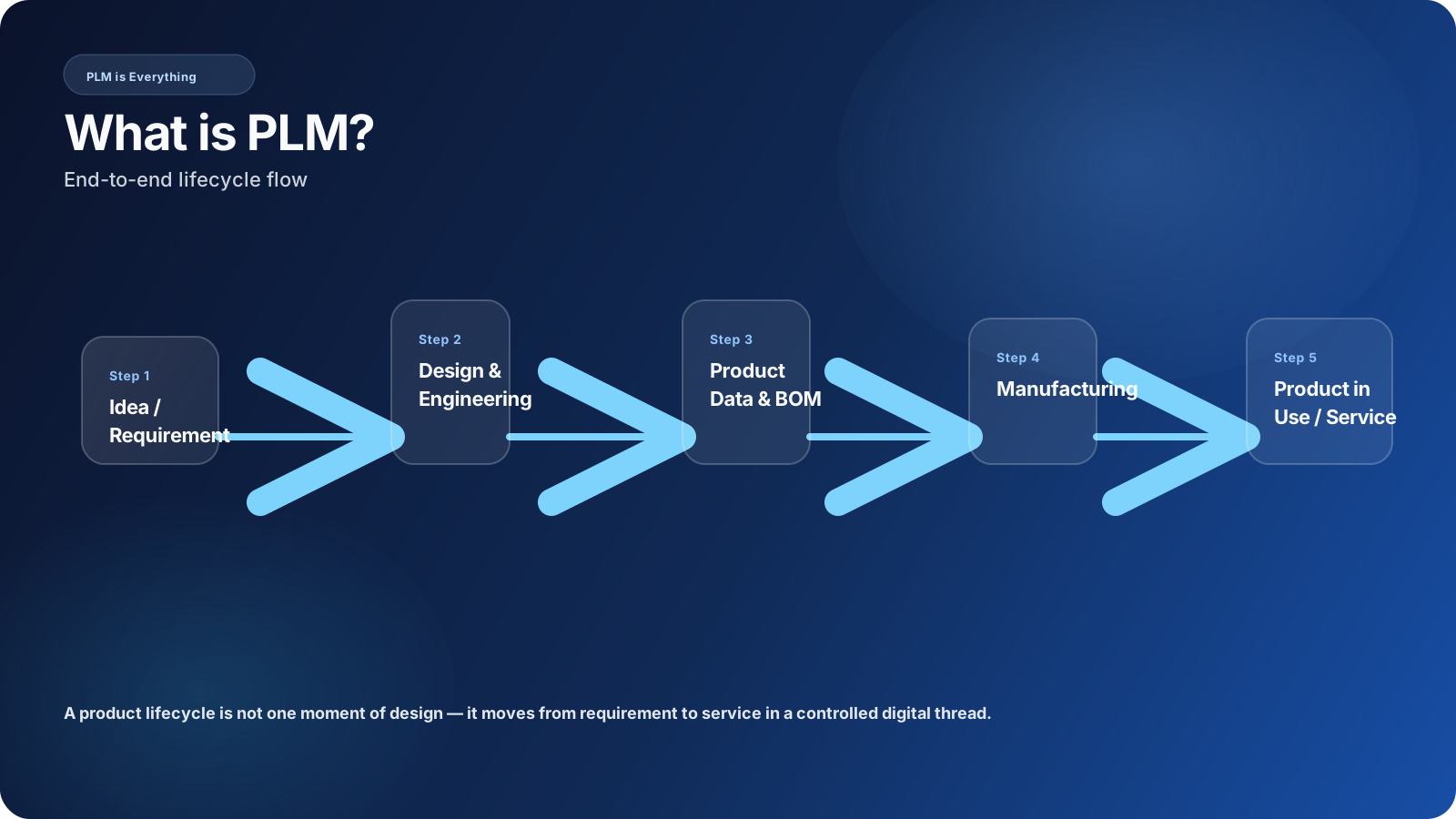
A product lifecycle is not one moment of design — it moves from requirement to service in a controlled digital thread.
Why companies use PLM
- To keep one controlled product definition
- To manage revisions and change clearly
- To connect engineering with manufacturing and service
- To avoid data confusion across departments
What happens if PLM is weak or missing?
When lifecycle thinking is missing, teams often work with disconnected spreadsheets, local files, manual approvals, and unclear ownership. The result is not just inconvenience. It becomes a business problem.
- Wrong versions reach downstream teams
- Changes are hard to trace
- Manufacturing and service lose context
- The same mistakes come back again
What changes when you understand PLM
Once you understand PLM, topics like BOM, workflow, change, service, integration, and Teamcenter stop feeling random. You start seeing that they are all part of one connected lifecycle story.
That shift matters. It takes you from tool-level learning to system-level understanding.
Frequently Asked Questions
Is PLM only for large companies?
No. Any company building and maintaining products needs lifecycle control. Large companies simply feel the pain more strongly.
Is PLM the same as Teamcenter?
No. PLM is the larger lifecycle concept. Teamcenter is one platform used to implement and manage that concept.