🏭 Industry Series
Why aerospace lifecycle is different
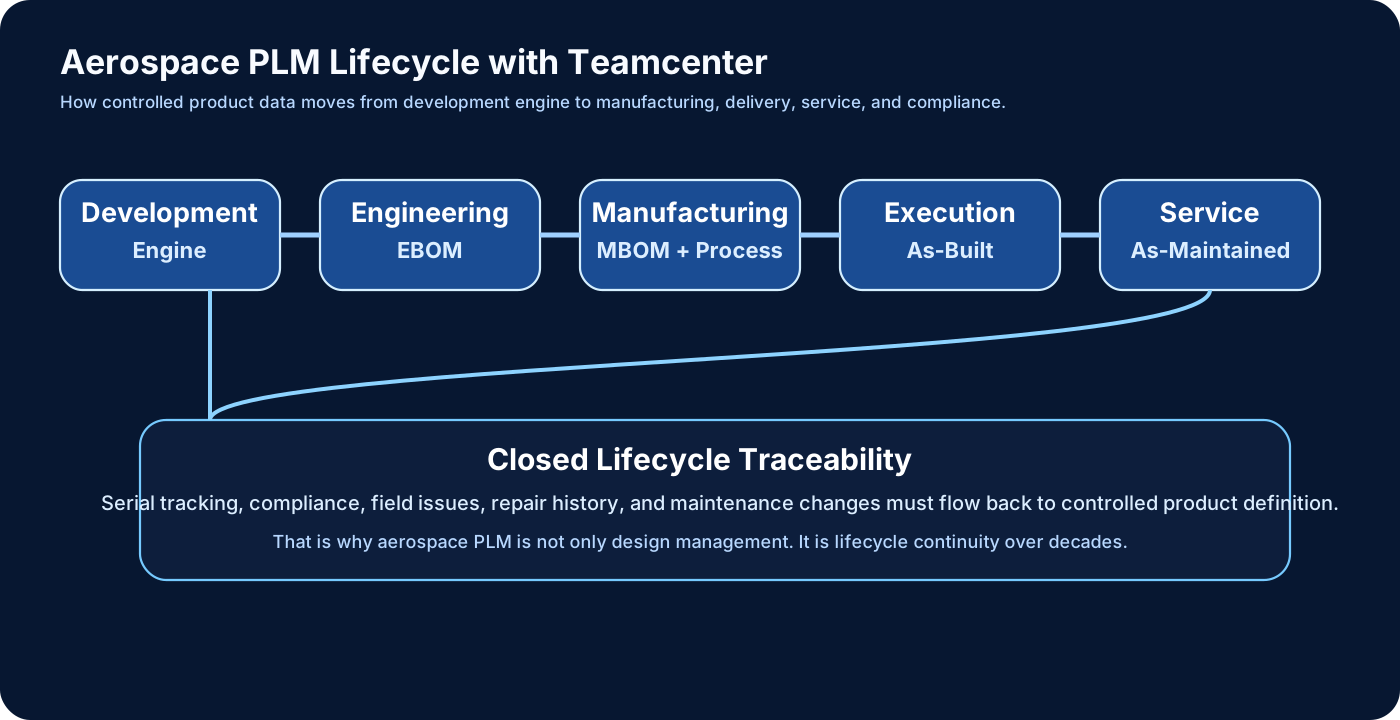
Aerospace products are not treated like ordinary high-volume products. They live longer, they are regulated more strictly, and they must remain traceable across engineering, manufacturing, operation, and service for many years. That changes the role of PLM completely.
In aerospace, Teamcenter is not only managing design files. It is helping maintain controlled product truth across a lifecycle that may continue for decades. That truth must survive change, validation, manufacturing reality, field operation, and maintenance history.
Development engine phase comes before real production reality
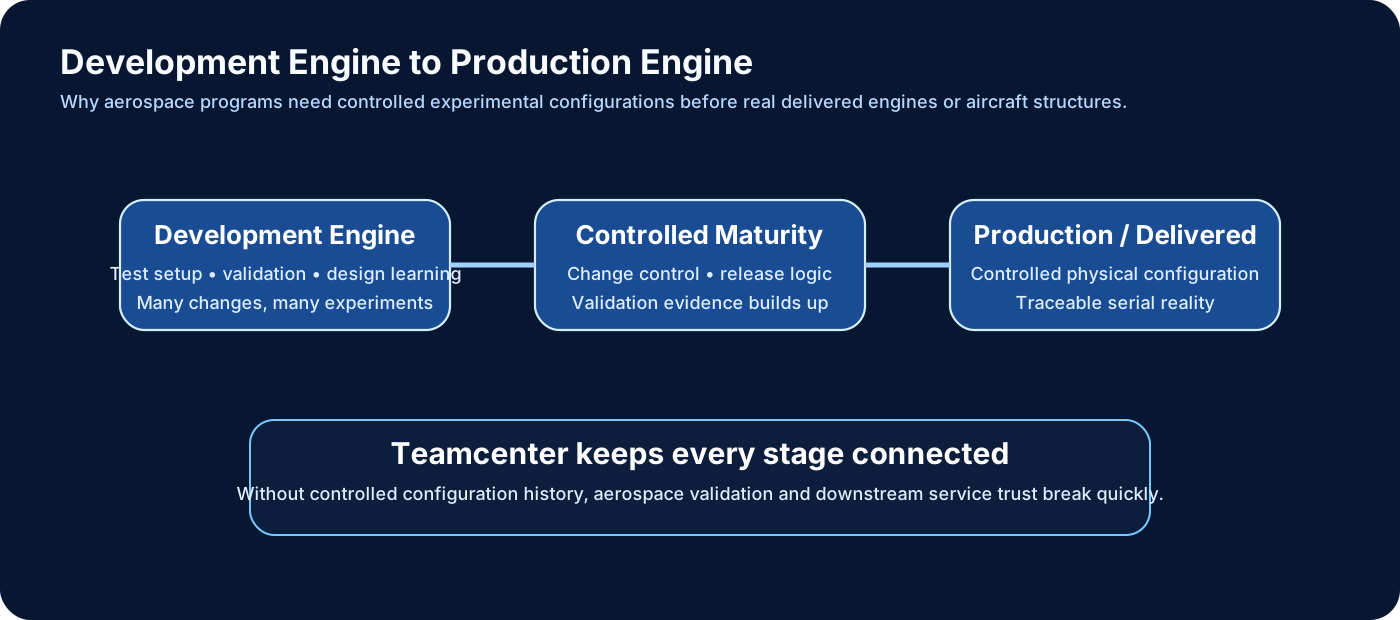
A key aerospace idea that many people outside the industry miss is the difference between a development engine and a real delivered engine. A development engine is not simply an early version of the final product. It is a learning and validation platform.
During this phase, engineering teams test ideas, validate performance, compare configurations, and refine design assumptions. That means configuration is changing often. If these changes are not controlled, later product maturity becomes unreliable.
This is where Teamcenter becomes very valuable. It keeps experimental configurations controlled instead of letting them become scattered across drawings, emails, spreadsheets, and disconnected local logic.
Engineering definition starts with controlled EBOM
Engineering defines what the product is. In Teamcenter, this means controlled product structure, CAD relationships, specifications, technical documentation, and revision history. This is the official engineering truth.
In aerospace, this matters even more because every change can affect certification, validation history, supplier impact, and downstream execution. A weak engineering baseline creates weak manufacturing and weak service later.
Manufacturing needs its own controlled structure
Manufacturing cannot work only with engineering intent. It needs to understand how the product will actually be built, assembled, sequenced, and verified. That is why the manufacturing view becomes critical.
Teamcenter helps by connecting engineering definition with manufacturing preparation. The idea is not to duplicate everything blindly. The idea is to keep lifecycle continuity while still allowing manufacturing logic to exist in a useful form.
In aerospace, this often includes process definition, planning detail, work instructions, assembly preparation, and traceability requirements that are stronger than in many other industries.
As-Built is the delivered physical truth
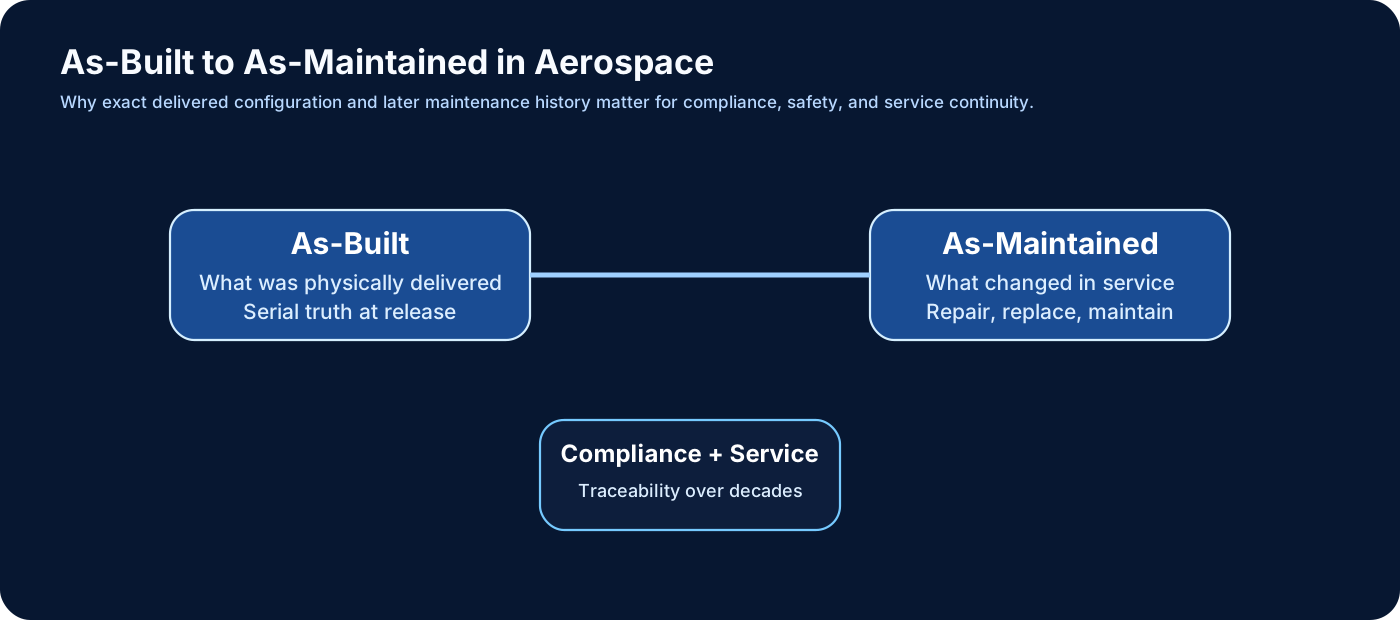
In aerospace, exact delivered configuration matters. It is not enough to know what was planned. The company must know what was physically built and delivered. This is where As-Built becomes essential.
As-Built connects serial-level truth to the lifecycle. It supports compliance, field support, maintenance readiness, and investigation when issues appear later. If As-Built is wrong, downstream service and compliance become weak.
Service lifecycle continues the story
Once the product enters operation, the lifecycle does not stop. Maintenance, repair, inspection, part replacement, and field findings become part of the product truth. That is why aerospace depends heavily on service continuity.
Teamcenter becomes powerful when it helps connect delivered truth with maintained truth. That means understanding how As-Built moves into As-Maintained. In simple words: what was delivered, what changed, and why.
Compliance and traceability are non-negotiable
Aerospace companies must answer questions that many other industries can treat more lightly. Which supplier provided the part? Which serial number received the change? Which delivered product contains this exact configuration? Which maintenance action modified the original built state?
That is why aerospace PLM is not only about product design. It is about traceability, accountability, and long-term lifecycle memory.
Where aerospace PLM usually fails
Most failures do not begin because Teamcenter lacks a feature. Failures usually begin because lifecycle ownership is weak. Engineering works in isolation. Manufacturing rebuilds structure separately. Service learns things that never flow back. Serial truth is incomplete. Manual updates begin to replace controlled updates.
Once that happens, the product may still move forward, but trust in the lifecycle starts breaking.
A simple way to understand Teamcenter in aerospace
- Development configuration supports learning and validation.
- Engineering definition controls the official design truth.
- Manufacturing preparation makes the product buildable.
- As-Built records what was actually delivered.
- As-Maintained records what changed in service.
- Compliance traceability connects all of them across time.
Final thought
In aerospace, Teamcenter works best when it is treated as the backbone of lifecycle continuity. It is not just an engineering repository. It is the controlled memory of the product across development, manufacturing, delivery, service, and compliance.
That is what makes aerospace PLM different. The real value is not only in storing product data. The real value is in keeping product truth connected across the full life of the product.