🏭 Industry Series
Why these terms confuse so many people
Today almost every company talks about Digital Thread, Digital Twin, and Industry 4.0. But in many projects these words are used more like presentation language than implementation language. People repeat them, but they do not always connect them to actual systems like Teamcenter, ERP, MES, service platforms, or physical product history.
That is why this topic needs a clean explanation. If you understand the difference between Digital Thread and Digital Twin, many modern PLM discussions suddenly become much easier to understand.
Start with one simple product example
Think of one product such as a vehicle, an engine, or an industrial machine. It is designed in CAD, released through engineering control, interpreted for manufacturing, built physically, delivered, used in the field, repaired, and improved over time.
Now ask two questions:
- How does the product information stay connected across all these stages?
- How is one real product represented digitally after it exists physically?
The first question leads to Digital Thread. The second question leads to Digital Twin.
What is Digital Thread?
Digital Thread is the connected flow of product data across the lifecycle. It is the continuity that links design, engineering release, manufacturing planning, plant execution, service history, and feedback into one connected product story.
In practical PLM terms, Digital Thread is not one single file, one single application, or one single object. It is the connected path of information across different lifecycle stages and systems.
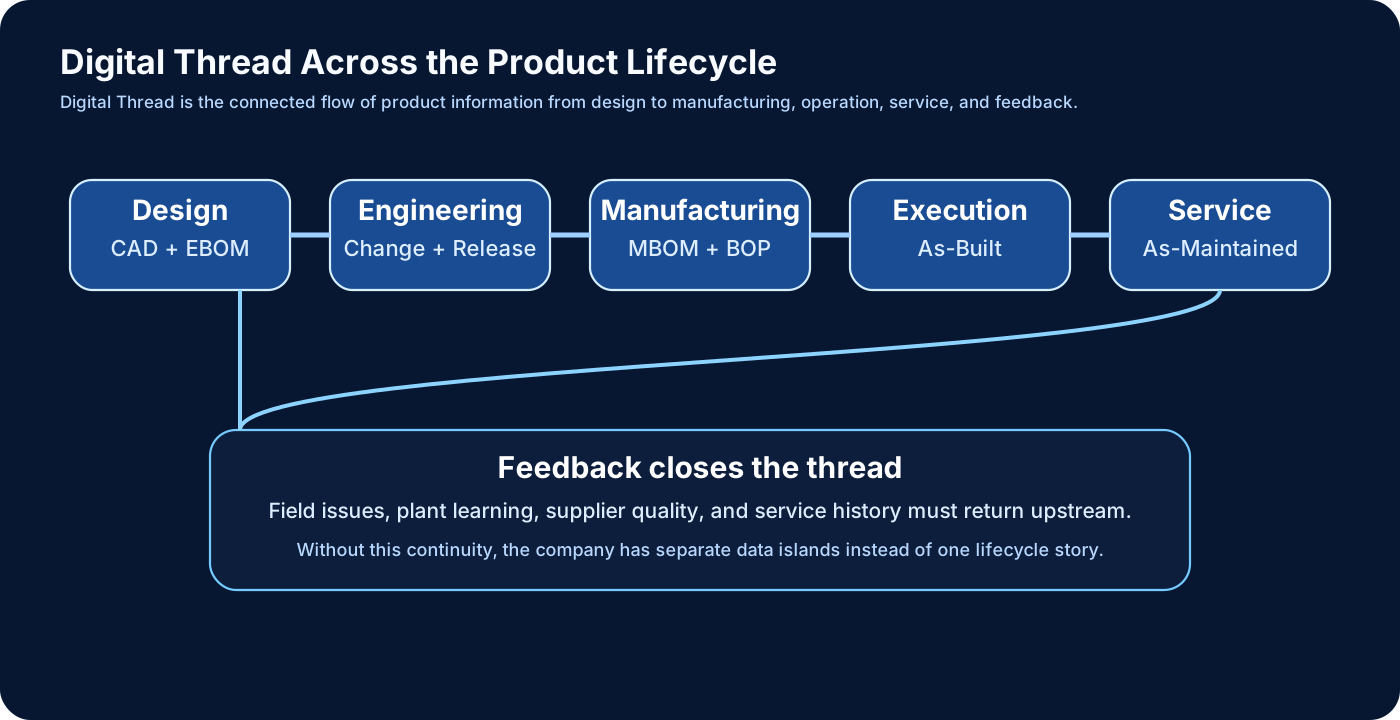
What Digital Thread looks like in a real Teamcenter landscape
In a Teamcenter-centered environment, Digital Thread may connect:
- CAD and engineering definition
- EBOM and controlled revision history
- MBOM and process planning
- ERP and MES handover
- As-Built physical truth
- As-Maintained service truth
This is why Digital Thread is often misunderstood. It is not just system integration. It is lifecycle continuity. Data must not only move. It must stay meaningful and traceable as it moves.
What is Digital Twin?
Digital Twin is the digital representation of a real product, product instance, or product state. If Digital Thread is the connection across lifecycle data, then Digital Twin is the digital identity of the product itself.
That digital identity can include structure, configuration, serial-level details, usage information, performance history, maintenance records, and operational context.
This is why Digital Twin is much more than a CAD model. CAD may be part of the early representation, but a true digital twin becomes valuable when the product exists in physical and operational reality.
Different kinds of Digital Twin
Design Twin
This is the early digital representation based on engineering definition, CAD, simulation, and design intent.
Manufacturing Twin
This reflects manufacturing structure, process definition, and planning context — how the product should be built.
Operational or Service Twin
This becomes the most powerful representation because it reflects what was actually built, how it is being used, and what has changed in service.
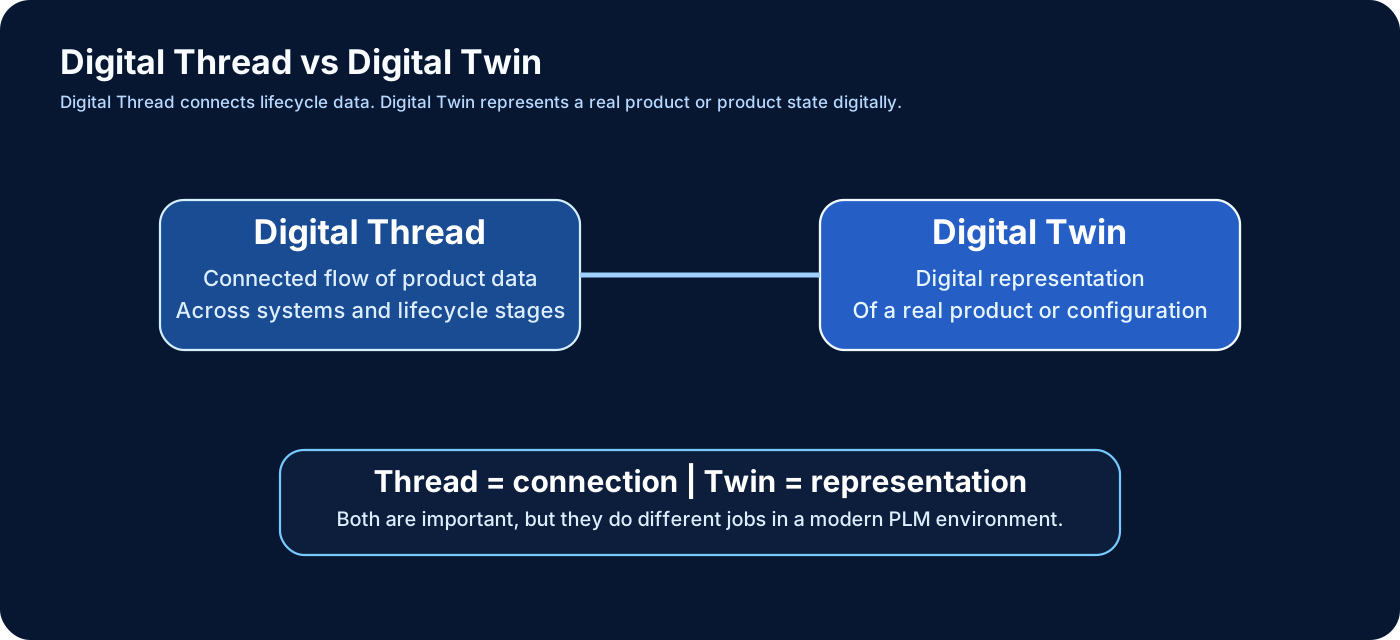
Digital Thread vs Digital Twin — the clean difference
The easiest way to separate them is this:
- Digital Thread is about connection.
- Digital Twin is about representation.
Digital Thread answers: how does information remain connected across the lifecycle?
Digital Twin answers: what is the digital representation of this real product or product configuration?
Why both are needed together
A digital twin without a digital thread becomes isolated. It may represent one product well, but it loses trust if it is disconnected from design intent, revision history, manufacturing truth, or service changes.
A digital thread without meaningful product representation becomes abstract. Data may be connected, but if you cannot understand the actual product state, value remains limited.
That is why the two ideas are related. They are not the same thing, but they become much more powerful together.
How Teamcenter supports Digital Thread
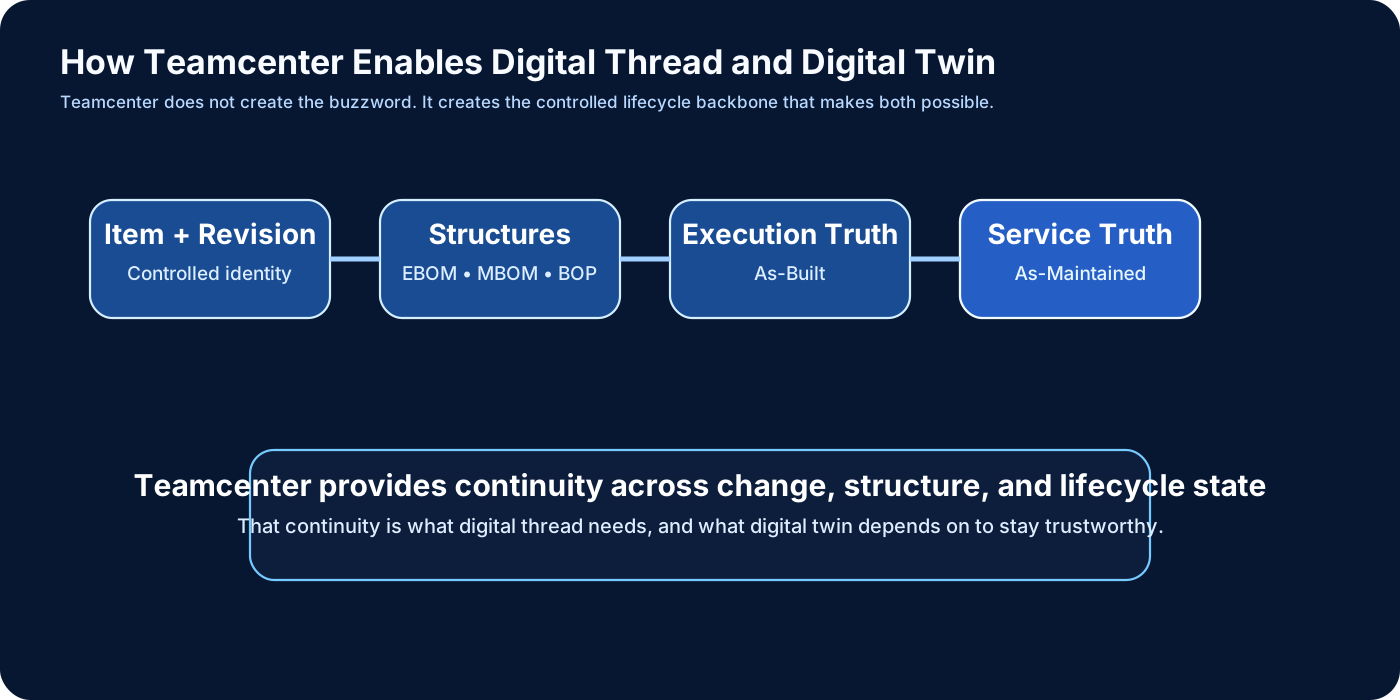
Teamcenter is valuable because it provides controlled continuity. It manages identity, revision, release, structure, change, and lifecycle relationships. That is exactly what Digital Thread needs.
Without controlled identity and controlled relationships, the lifecycle quickly becomes fragmented. Engineering starts one truth, manufacturing builds another, and service records something else. Teamcenter helps reduce that fragmentation by keeping product definition and lifecycle logic connected.
How Teamcenter supports Digital Twin
Teamcenter becomes important for Digital Twin when the company needs to represent physical product reality digitally. This includes As-Built and As-Maintained behavior, serial-level traceability, maintenance continuity, and change history over time.
In other words, Teamcenter helps create trust in the digital representation because the twin is connected to controlled lifecycle data, not just an isolated visual or model snapshot.
Real industry example: aerospace
Take one aircraft engine. The engine is designed, validated, manufactured, delivered, maintained, inspected, and repaired over many years. Digital Thread connects all these stages: engineering definition, manufacturing planning, delivered configuration, maintenance actions, and feedback to future changes.
The Digital Twin is the digital representation of that engine instance: its serial number, built structure, maintenance history, and real service state. If this twin is disconnected from lifecycle truth, the company loses confidence in traceability and compliance.
Real industry example: automotive
In automotive, Digital Thread connects engineering definition, manufacturing planning, plant execution, supplier coordination, and service feedback. Even though volume is much higher than aerospace, the need for continuity is still huge.
The Digital Twin may represent one vehicle, one configured product, or one tracked physical state depending on the use case. The important point is that the twin becomes meaningful only when it stays tied to lifecycle truth.
Where AI fits into this picture
AI becomes much more useful when Digital Thread and Digital Twin are strong. AI can analyze lifecycle continuity, detect pattern issues, suggest improvements, and help organizations understand connected data faster.
But AI does not replace the need for lifecycle control. In fact, weak digital thread usually means weak AI results, because the underlying product truth is still fragmented.
Why many implementations fail
Most failures happen because companies treat Digital Thread like only an integration task or Digital Twin like only a 3D model problem. Real failure comes from weak lifecycle thinking:
- engineering is disconnected from manufacturing
- manufacturing is disconnected from service
- As-Built truth is weak
- feedback never returns upstream
- identity and change are not controlled properly
That is why these concepts are not only technology ideas. They are lifecycle discipline ideas.
Simple final understanding
If you want one clean memory line, keep this:
- Digital Thread = connected lifecycle data flow
- Digital Twin = digital representation of the product
Both are important. Both are related. But they are not interchangeable.
Final thought
Real engineering is not design alone. Real manufacturing is not production alone. Real service is not maintenance alone. Everything is connected, and that connection is what modern PLM is trying to protect.
That connection is Digital Thread. That digital identity is Digital Twin. And Teamcenter becomes powerful when it helps make both trustworthy across the lifecycle.