🏭 Industry Series
Why automotive PLM flow matters
In an automotive company, one product does not stay inside one department. Engineering defines it. Manufacturing prepares how it will be built. Plant systems execute it. Quality and service later depend on what was actually built. If each area works in isolation, the company ends up with repeated errors, weak traceability, late rework, and disconnected learning.
That is why Teamcenter is important. It is not only a storage system. In a good automotive setup, it becomes the place where product definition stays controlled while downstream systems use that definition in their own way.
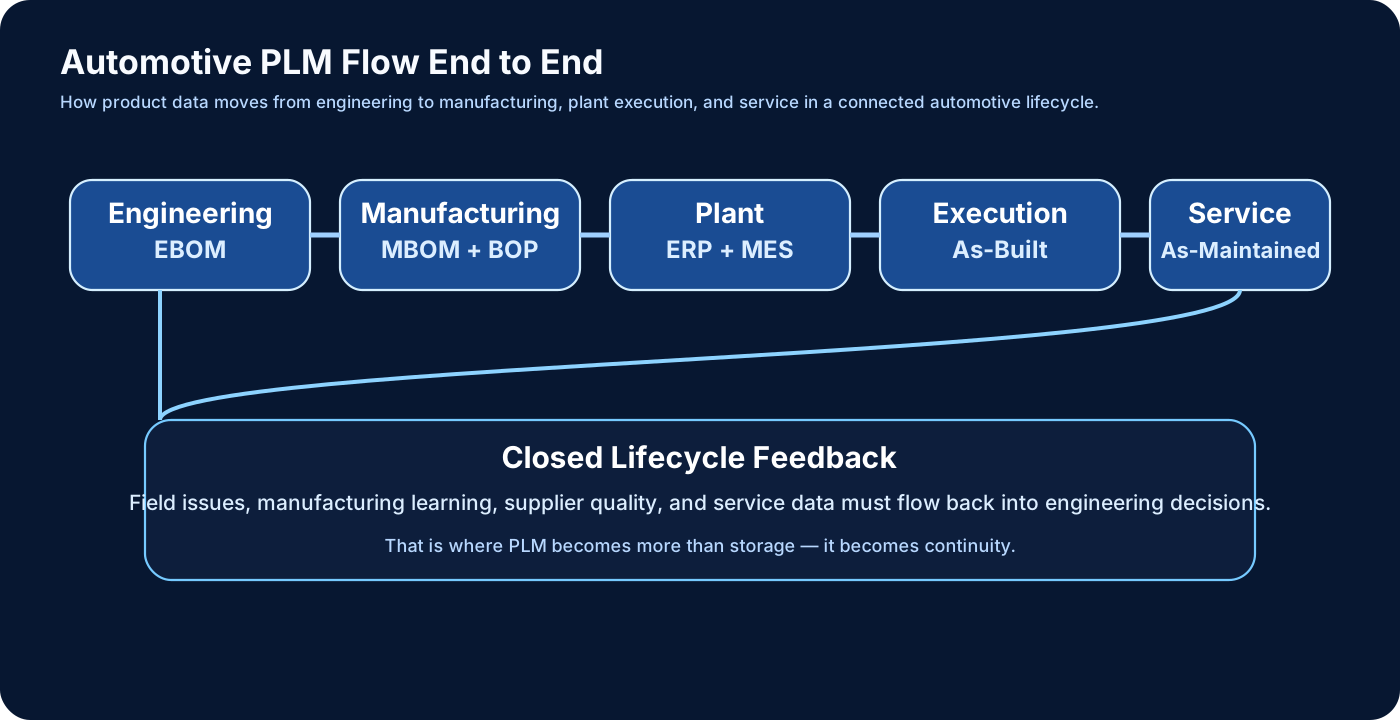
Step 1: Engineering creates the product definition
The automotive flow usually starts with engineering. Here the company defines the product as it is designed. This is where EBOM becomes important. Engineering decides what the product is made of, how major systems are structured, which revisions are valid, and what the official design intent looks like.
In Teamcenter, this stage is important because the system keeps the product definition controlled. It manages revisions, relationships, documents, drawings, CAD links, and change history. Without this discipline, the downstream lifecycle quickly becomes unstable.
Step 2: Manufacturing prepares how the product will actually be built
Engineering definition alone is not enough for a plant. Manufacturing must decide how the designed product will be assembled, sequenced, grouped, consumed, and controlled in production. That is why MBOM and process definition exist.
This is where many teams misunderstand Teamcenter. They assume MBOM is just a copy of EBOM. In real automotive programs, that is rarely enough. Manufacturing may reorganize structure for assembly logic, planning logic, line logic, station logic, supplier kits, or process grouping. Teamcenter helps because it keeps engineering and manufacturing structures connected while still allowing them to serve different purposes.
Step 3: ERP and MES take over business execution and plant execution
Teamcenter does not do everything alone. In a typical automotive landscape, ERP manages business execution such as material, orders, cost, and planning context. MES manages what happens on the shop floor: operations, sequencing, traceability, and actual execution behavior.
The important question is not “which tool is best?” The important question is “who owns what?” If Teamcenter, ERP, and MES all try to own the same truth, confusion starts. If ownership is clear, the lifecycle becomes stable.
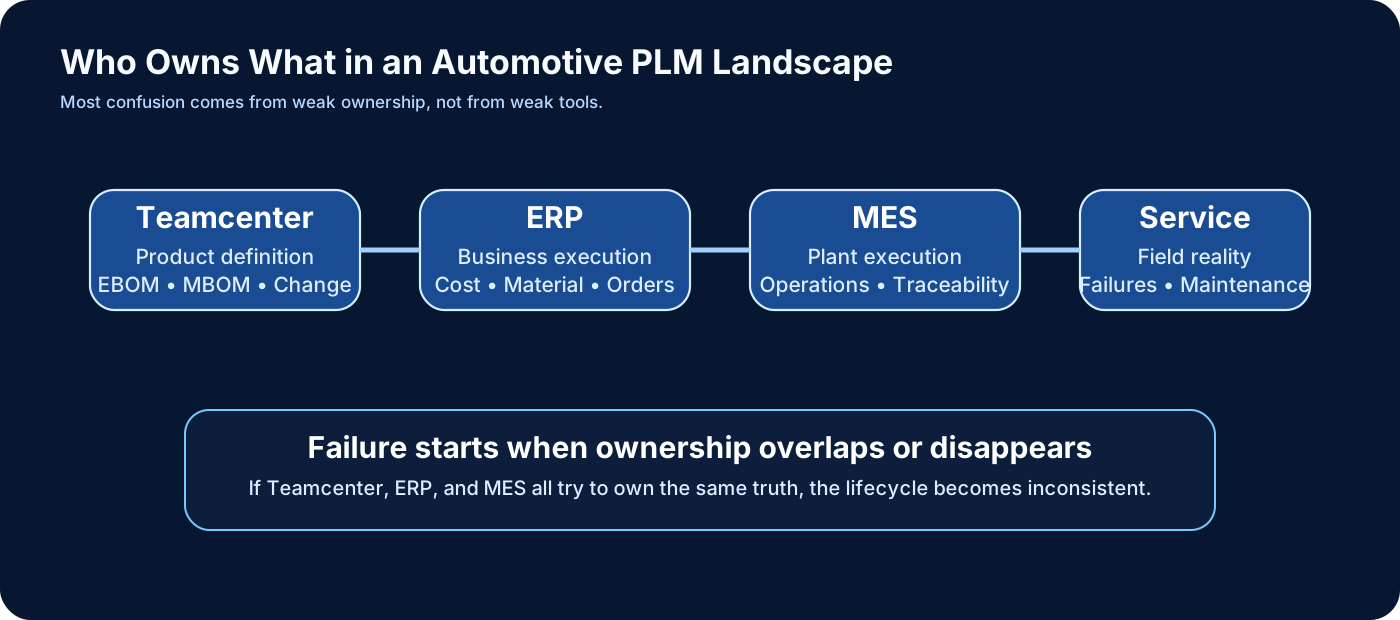
Where Teamcenter fits in the automotive stack
Teamcenter is strongest when it owns controlled product definition, structure, revision, and lifecycle continuity. ERP is strongest when it owns business execution. MES is strongest when it owns shop floor execution. Service systems or downstream lifecycle tools become important when vehicles enter field operation and maintenance reality.
When these systems are connected properly, the company gains digital continuity. When they are not, each department rebuilds its own version of truth.
Step 4: As-Built becomes the real physical truth
There is always a difference between planned definition and actual execution. The actual built configuration matters because it tells the company what was physically produced. In automotive, this becomes critical for traceability, serial logic, plant quality analysis, recall readiness, and downstream service accuracy.
This is where the lifecycle becomes real. Engineering intent and manufacturing planning are important, but As-Built tells the company what actually left the plant.
Step 5: Service and field reality complete the product story
The product lifecycle does not end after manufacturing. Once the vehicle is in operation, service becomes important. Failures, replacements, field quality, warranty trends, and maintenance logic all feed back into the lifecycle. This is where service structures, As-Maintained thinking, and field feedback become valuable.
A mature automotive PLM flow does not stop at production. It closes the loop by learning from service and bringing that learning back to engineering and planning.
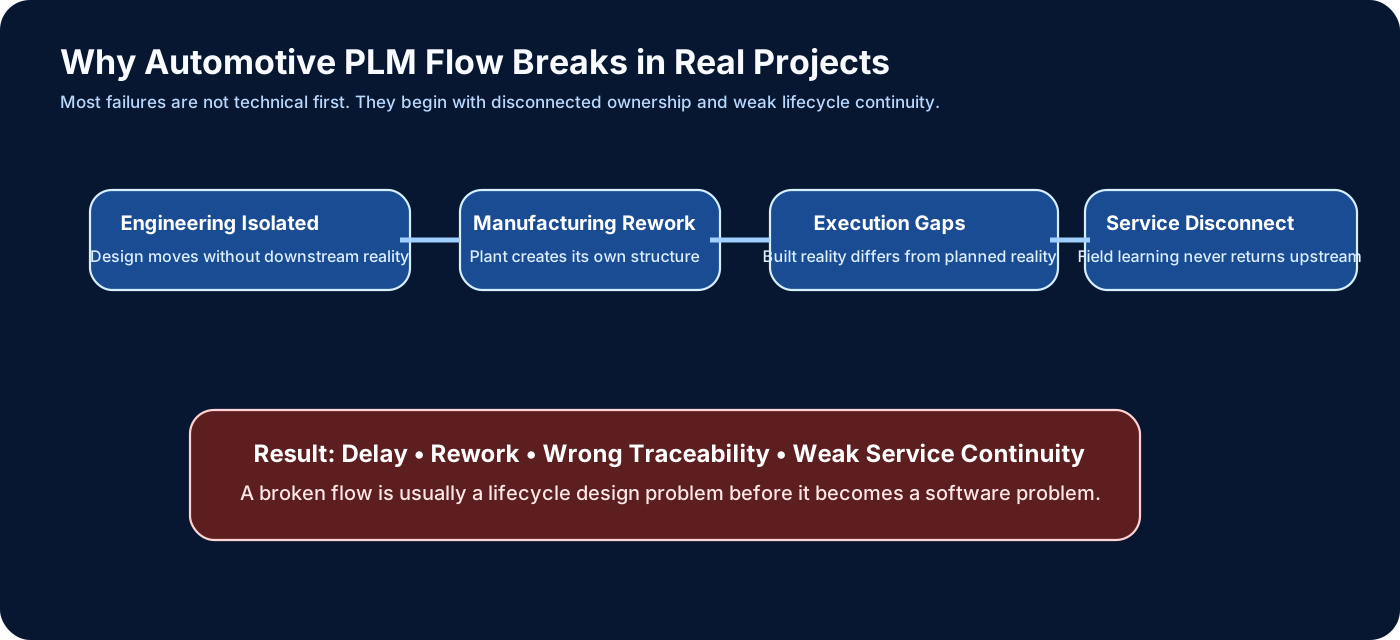
What usually goes wrong in real projects
Most automotive PLM problems are not caused by one missing feature. They come from lifecycle disconnects. Engineering works in isolation. Manufacturing recreates structure manually. Plant execution diverges from what was planned. Service learning never reaches upstream decisions.
Why Teamcenter is valuable here
Teamcenter helps hold the lifecycle together. It makes engineering data controlled. It supports manufacturing continuity. It helps downstream systems consume the right product context. Most importantly, it makes product change and structure behavior traceable across time.
In simple words, Teamcenter is valuable because it keeps the product story connected while the product itself keeps moving through design, planning, execution, and service.
A simple way to understand the full automotive PLM flow
Think of it like this:
- Engineering says what the product is.
- Manufacturing says how the product will be built.
- ERP and MES help the business and plant execute that plan.
- As-Built shows what was really produced.
- Service shows what happened after production.
Teamcenter becomes powerful when it connects these stages instead of letting them drift apart.
Final thought
Automotive PLM flow is not a line of software tools. It is a connected product journey. Teamcenter works best when it is used as the backbone of that journey — not only as a document store, not only as a CAD vault, and not only as an engineering tool.
When engineering, manufacturing, plant execution, and service all stay connected, the company moves faster and learns better. That is where real PLM value appears.