First, remove the common confusion
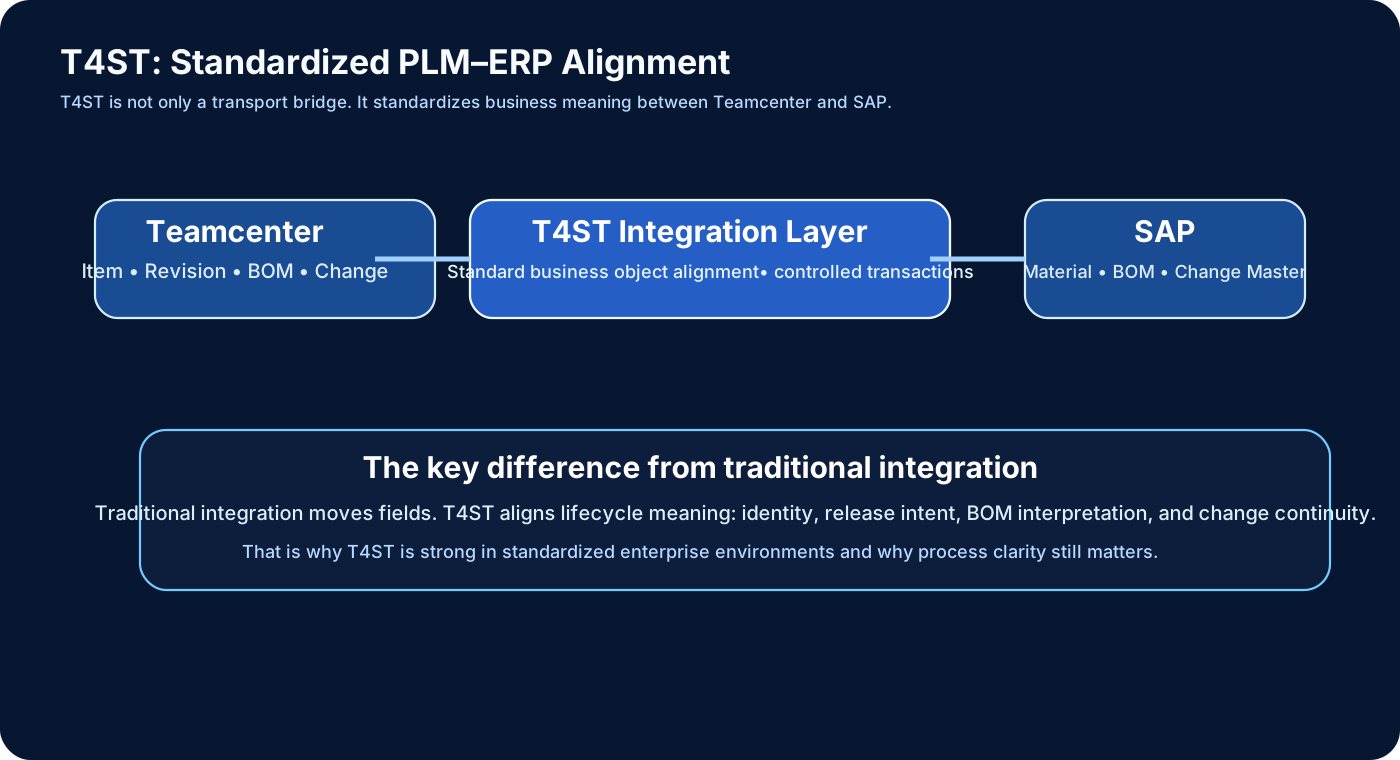
T4ST is not the same as T4S. T4ST is the standardized Teamcenter for SAP integration approach co-developed for stronger PLM–ERP alignment. It is not simply another scripting framework to move fields from one system to another. Its strength comes from standardization and business object alignment.
That difference matters. Traditional integration often focuses on mapping fields. T4ST focuses on aligning meaning: product identity, lifecycle state, BOM interpretation, and change continuity between Teamcenter and SAP.
Why traditional integration often becomes painful
In many PLM–ERP projects, the company starts with technical questions too early: what fields should move, what API should be used, what script should be triggered. But the deeper issue is not transport. The deeper issue is shared meaning.
If Teamcenter says one revision is valid, but SAP still behaves like another version is production-ready, the systems are not truly integrated. If EBOM structure and SAP BOM meaning are not aligned, data can move and still create confusion. Traditional integration often struggles here because every project ends up redefining too much logic independently.
What T4ST changes conceptually
T4ST changes the mindset from field transport to standardized business alignment. Instead of asking only how to move attributes, it asks how Teamcenter product objects should correspond to SAP business objects in a repeatable, enterprise-safe way.
That is why T4ST feels more productized than ad hoc integration. It is not saying “send any data.” It is saying “align controlled product meaning.”
How T4ST works at a practical level
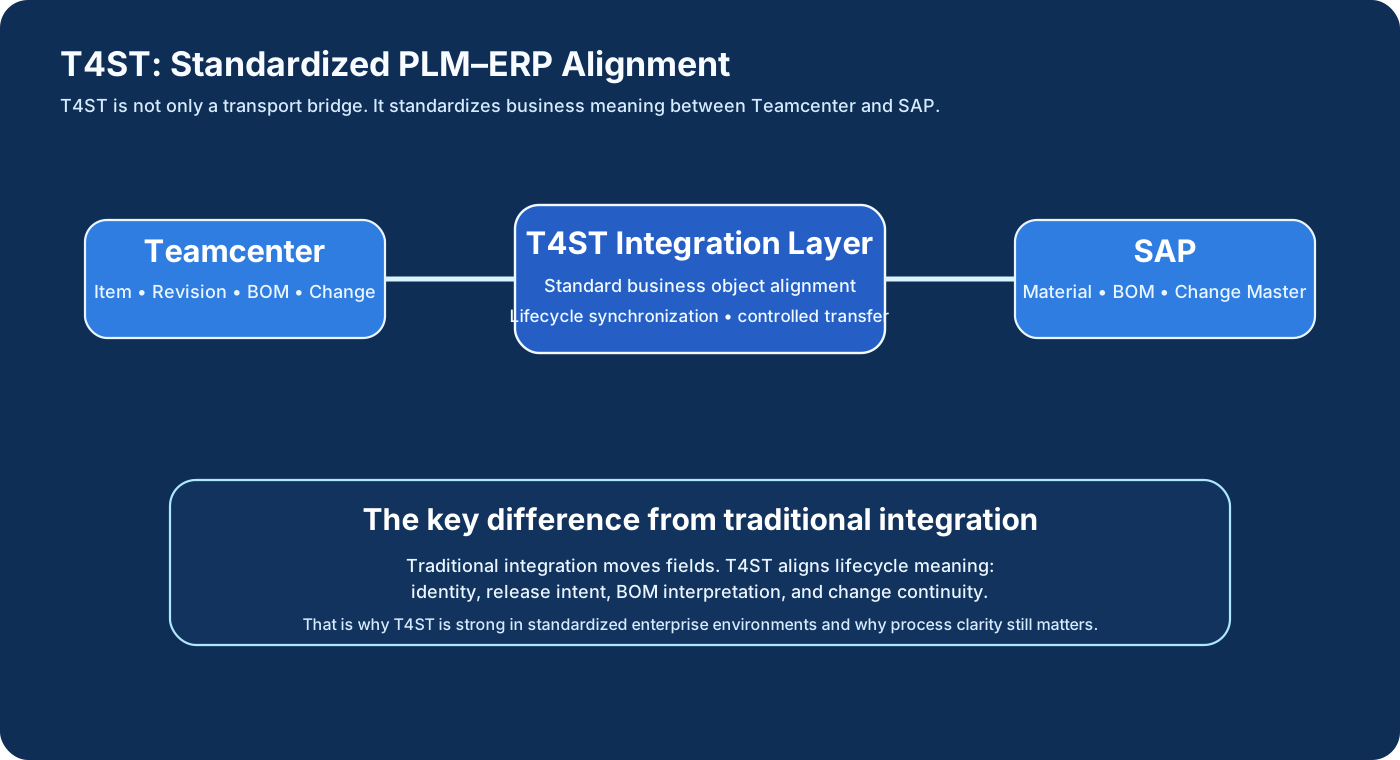
At a practical level, T4ST sits between Teamcenter and SAP with predefined business logic for standard object alignment. Teamcenter remains the controlled engineering system. SAP remains the enterprise execution and business system. T4ST helps ensure that when product information crosses the boundary, it crosses with preserved meaning.
This means the integration is not only about values like ID, description, or status. It is about how those values behave in context.
Typical object alignment thinking
- Teamcenter Item aligns with SAP Material thinking.
- Teamcenter revision and release meaning align with SAP control logic.
- Engineering or manufacturing structure aligns with corresponding BOM meaning in SAP.
- Change continuity aligns with SAP change handling expectations.
That alignment is where T4ST becomes more mature than purely project-specific mapping approaches.
Real process flow
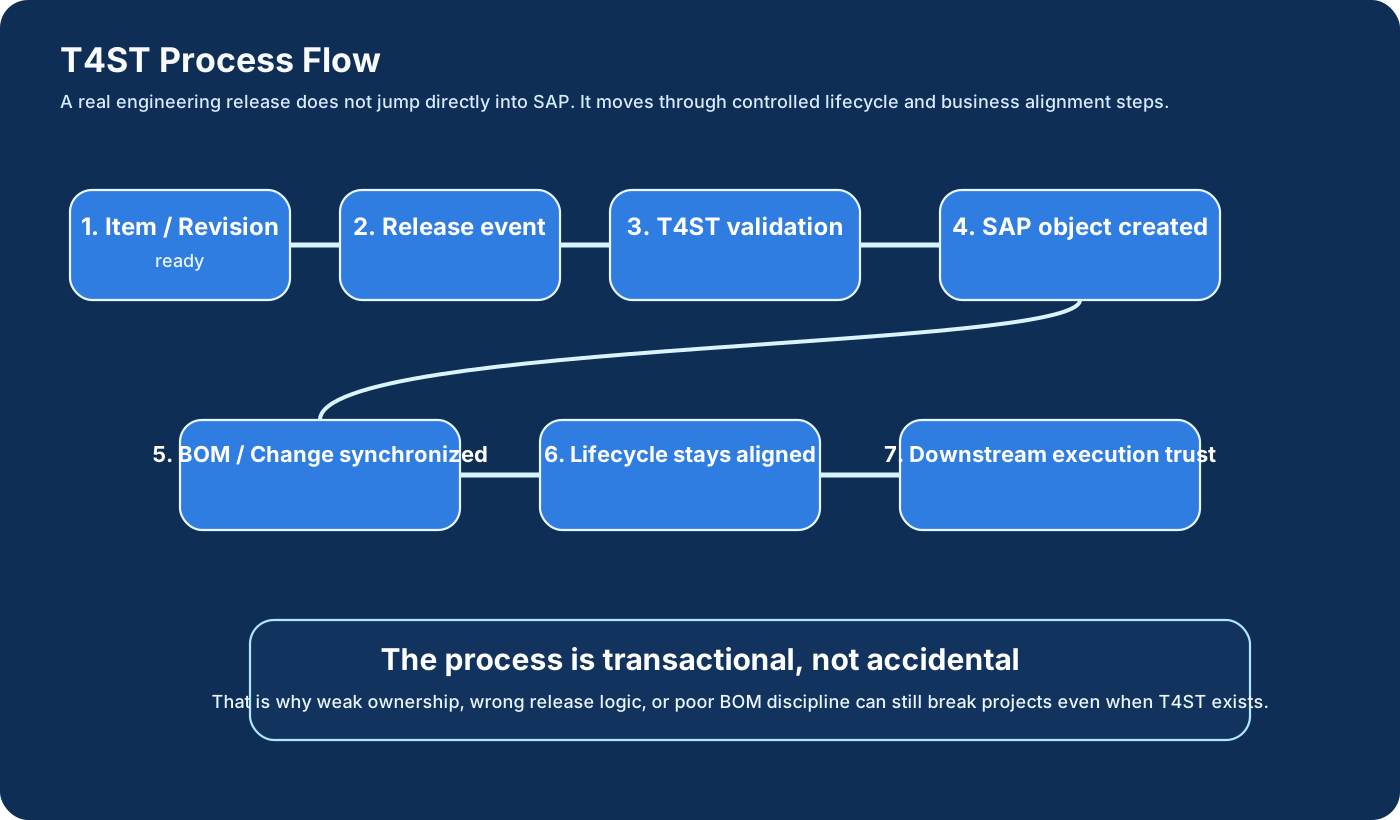
Imagine a new product or revision becomes ready in Teamcenter. In a mature environment, this is not pushed directly to SAP without context. T4ST validates the object state, interprets the business meaning, and then creates or updates the corresponding SAP object in a controlled way.
Why this matters for lifecycle trust
PLM and ERP are not supposed to compete for truth. They are supposed to own different parts of the same lifecycle. Teamcenter controls product definition, revision, engineering context, and structure logic. SAP controls business execution, material readiness, procurement context, and downstream enterprise behavior.
T4ST helps make those responsibilities meet cleanly. That is why it is more accurate to call it an alignment layer than a data pipe.
Where T4ST is strongest
T4ST is strongest in companies that want standardized enterprise integration and do not want every project to reinvent the same Teamcenter–SAP connection logic. It is especially valuable where governance, upgradeability, and repeatability matter more than unlimited customization freedom.
- large enterprises
- SAP-heavy landscapes
- standardized PLM–ERP processes
- repeatable object and lifecycle alignment needs
Where T4ST does not magically save a weak process
This is where many teams get disappointed. T4ST can standardize integration behavior, but it cannot fix unclear ownership, poor release discipline, broken EBOM/MBOM logic, or weak change processes by itself.
If the company does not know who owns the product truth at each stage, even a strong standard integration product will only expose the confusion faster.
Traditional vs modern is not really old vs new technology
The real difference is not “legacy API vs modern API.” The real difference is whether integration is treated as isolated field movement or as lifecycle meaning alignment.
Traditional thinking often says:
- move data
- map fields
- fix mismatches later
T4ST thinking says:
- align business objects
- align release meaning
- align lifecycle intent before transport
How this connects to your larger PLM landscape
T4ST does not live alone. It connects naturally with the rest of the digital thread. Design starts in NX and Teamcenter. Manufacturing interpretation grows through MBOM and process planning. SAP needs aligned material and BOM meaning. Downstream execution and service depend on the trustworthiness of that chain.
That is why T4ST should be understood together with NX integration, manufacturing planning, and digital thread thinking — not as one isolated integration topic.
Where projects usually fail even with T4ST
- unclear data ownership between PLM and ERP
- weak lifecycle state definition
- poor engineering structure discipline
- manufacturing meaning not aligned before ERP handover
- treating T4ST like a technical plugin instead of a process bridge
These are not small issues. They are exactly the reason enterprise integrations become fragile.
One clear way to remember T4ST
If you want one short memory line, keep this:
Traditional integration moves data. T4ST aligns business meaning.
Final thought
Data can be transferred easily. But trusted product meaning is much harder to preserve across systems. T4ST matters because it tries to standardize that meaning between engineering and enterprise execution.
That is why it belongs in serious PLM discussions. Not as a buzzword, and not as a simple connector — but as a standard enterprise alignment approach between Teamcenter and SAP.